


Understanding the Impact of Creatine Dosing: Avoiding Stomach Upset and Maximising Results
I'll be honest with you, I got creatine completely wrong the first time.
I was shovelling unmeasured scoops into a glass of orange juice, knocking it back before training, and wondering why I was spending more time in the bathroom than on the track.
Sound familiar? You're not alone, and more importantly, it's entirely fixable.
After years of training, researching, and eventually building beForm Nutrition around the supplements I actually wanted to exist, I can tell you that creatine is still one of the most effective performance tools available to any athlete.
The problem is rarely the creatine itself. It's the dosing.
Here's everything you need to know to get it right.
What Is Creatine and Why Does It Work So Well?
Creatine is an amino acid compound that your body produces naturally and stores around 95% of it directly in your muscle tissue.
Its job is to help regenerate ATP (adenosine triphosphate), which is essentially your muscles' instant energy currency during high-intensity effort.
When you sprint, lift, or push hard, your body burns through ATP almost instantly. Creatine steps in to recycle the spent version (ADP) back into usable ATP, meaning you can sustain that effort for longer before fatigue sets in.
Beyond energy, creatine also draws water into muscle cells, which over time contributes to increased muscle volume and, when paired with training, genuine strength gains.
The research here is about as solid as it gets in sports science. Creatine monohydrate has decades of studies supporting its benefits for strength, speed, exercise capacity, and recovery. It's not a trend. It's one of the most consistently proven ergogenic aids we have.
> Read our full guide to creatine for runners
And yet, get the dosing wrong, and it'll have you doubled over with cramps before you even hit the warm-up.

Why Creatine Causes Stomach Upset (And Why It's Usually Your Fault)
I say that with love, because it was absolutely my fault too.
Creatine is osmotic, meaning it draws water. When you take too much at once, your gut becomes a bit of a battleground.
Creatine is pulling fluid into the intestinal environment faster than your digestive system can manage, leading to bloating, cramping, and the kind of urgency you really don't want mid-run.
Add to that poor hydration, taking it on an empty stomach, or dumping your entire daily dose in one go, and you've created the perfect conditions for gastrointestinal chaos.
The good news? Every single one of those causes is within your control.
The Right Way to Dose Creatine
There are two approaches, and the right one depends on how quickly you want to see results.
Option 1: The Loading Phase (Faster Results)
The loading phase is designed to saturate your muscles with creatine as quickly as possible, typically within 5 to 7 days, so you start feeling the performance benefits sooner.
How it works:
- Take 20g of creatine per day for 5–7 days
- Split this into four 5g doses spread throughout the day with meals where possible
- After loading, drop to a 3–5g maintenance dose daily
Spreading the doses is non-negotiable here. Taking 20g in one sitting is exactly the kind of thing that sends people sprinting for the nearest toilet. Four smaller doses with food and plenty of water make the process far more manageable.
Who it suits: Athletes who want to feel the difference quickly, or those preparing for an event or race block.
Option 2: Skip the Loading Phase (Slower but Simpler)
If the idea of a loading phase feels overwhelming, don't worry, you can skip it entirely.
Simply take 5g of creatine daily from day one. Your muscles will reach full saturation eventually; it just takes around 3–4 weeks rather than 5–7 days. For most people with a consistent training schedule, this is the more sustainable and stomach-friendly approach.
Who it suits: Beginners, anyone with a sensitive stomach, or those who just want a simple daily habit without the complexity.

How Long Until Creatine Actually Works?
This is the question nobody wants to wait around to find out the answer to, and one I remember asking myself impatiently in the early days.
The honest answer depends on how you're dosing, but here's what to realistically expect:
With a loading phase
If you follow the 20g daily loading protocol for 5–7 days, your muscles reach close to full creatine saturation by the end of that first week.
Most people notice the first signs of it working within days, a slight fullness to the muscles as they draw in more water, and a feeling of being able to push a little harder or recover a little faster between sets.
Meaningful strength and performance improvements typically become noticeable within 2–3 weeks of completing the loading phase, as your training adapts to the increased energy availability your muscles now have access to.
Without a loading phase
Skipping loading and going straight to 5g daily means your muscles saturate more gradually. You're looking at around 3–4 weeks before creatine stores are fully topped up, and 4–6 weeks before you're likely to notice a clear performance difference.
This isn't a reason to force yourself through a loading phase if it doesn't suit you; the result is the same. It's just a slower road to the same destination.
What does "working" actually feel like?
This is worth addressing because creatine doesn't feel like a pre-workout or a stimulant. There's no buzz, no energy hit, no obvious moment where you think yes, that's the creatine.
Instead, what you notice over time is more subtle and more meaningful: you recover faster between hard efforts, you can sustain intensity for longer before you fade, and your training sessions feel slightly more productive week on week.
Some people also notice an increase in muscle fullness relatively quickly, particularly during a loading phase, as creatine draws more water into muscle cells.
This isn't fat or bloat; it's intramuscular water, and it's part of what gives creatine-supplemented muscles their increased work capacity.
The compounding effect
I always tell people to think of creatine like a savings account rather than a spending account. You don't feel rich after one deposit.
But top it up consistently over weeks and months, and the compound effect becomes genuinely significant.
Athletes who've been on creatine for three, six, or twelve months consistently report greater strength retention, faster recovery between sessions, and the ability to train at higher intensity more frequently.
That's the real return on investment, and it's why I made creatine the foundation of the beForm range rather than a secondary product.
Creatine Timing: Morning, Pre-Workout or Post-Workout?

This is one of the most searched questions around creatine, and the honest answer is that timing matters far less than most people think.
Consistency is what moves the needle. But since you're here and you want to get it right, let's break down what the research actually suggests.
Morning (fasted)
Taking creatine first thing is fine from a convenience standpoint; it's easy to build into a morning routine, and you won't forget it.
The downside is that fasted supplementation can increase the risk of stomach upset, particularly if you're sensitive, and there's no performance evidence that morning timing offers any specific advantage over other windows.
If mornings work best for your routine and you take it with breakfast, go for it. If you're rolling out of bed and taking it before eating anything, you may want to reconsider.
Pre-workout
The logic here makes intuitive sense: take creatine before training so it's available when your muscles need it.
In practice, though, creatine doesn't work acutely the way caffeine does. It's not something that kicks in within 30–60 minutes of taking it.
Its benefits come from sustained muscle saturation over days and weeks, not from a single pre-session dose.
That said, pre-workout timing isn't wrong. If it helps you remember to take it, and you're pairing it with a pre-training meal, it's a perfectly reasonable approach.
Post-workout
This is where the evidence leans most favourably.
Some studies suggest that taking creatine immediately after training, when muscles are in an active nutrient-uptake state, may result in slightly greater muscle gain than pre-workout timing.
The differences aren't dramatic, but if you're optimising, post-workout with your recovery meal is the window I'd point you towards.
It also happens to be the most stomach-friendly timing, since you're pairing it with food and your body is primed to absorb nutrients efficiently.
The honest summary: Post-workout with food is the optimal default. But the timing difference between pre and post is marginal.
The real performance gap is between people who take creatine consistently and people who don't. Pick the window that fits your life and stick to it; that matters far more than chasing the perfect minute.
Creatine With Food vs Fasted: Does It Make a Difference?
Yes, and more than most people realise, particularly if you've ever experienced stomach issues with creatine.
Why food helps
When you take creatine alongside a meal, a few things happen in your favour.
First, the insulin response triggered by eating, particularly carbohydrates, appears to enhance creatine uptake into muscle tissue.
Insulin acts as a transport signal, and a fed state gives creatine a better delivery mechanism into the cells where it's needed.
Second, food physically buffers the creatine in your digestive system, slowing its transit and giving your gut more time to manage it without the fluid-drawing osmotic effect overwhelming your intestines. Less bloating, less cramping, more comfortable absorption.
What happens fasted?
Taking creatine on an empty stomach isn't dangerous, but it does increase the likelihood of gastrointestinal discomfort, particularly during a loading phase when doses are higher.
Without food to slow things down, creatine moves through your digestive system faster, drawing more fluid as it goes.
For some people, this causes no issues whatsoever. For others, it's the direct cause of the bloating and cramps they blame on creatine itself.
What to pair it with
You don't need a full meal; a substantial snack with some carbohydrates works well. Think a banana and yoghurt post-run, or your regular post-training meal.
The goal is simply to avoid taking creatine in isolation on an empty stomach.
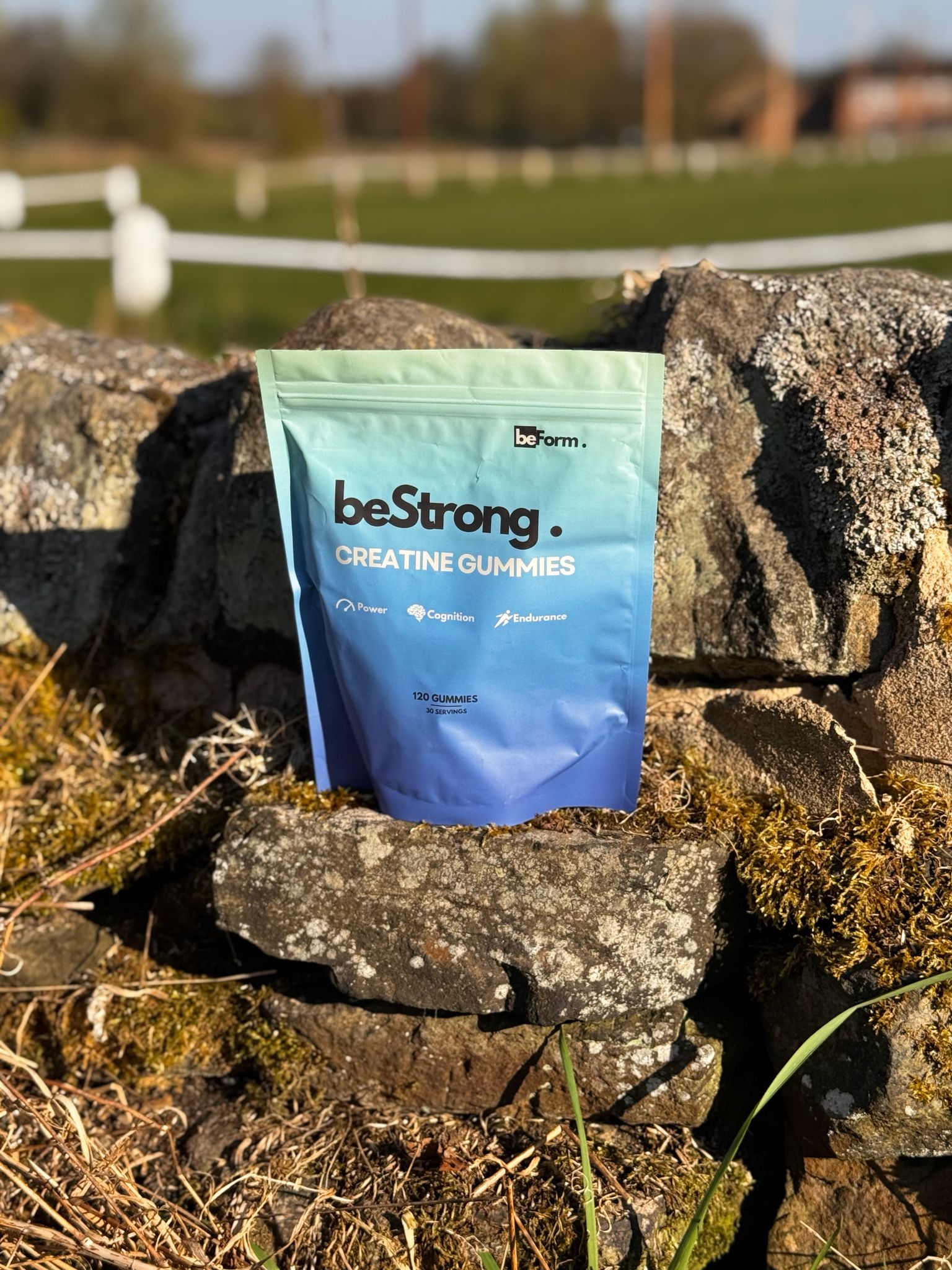
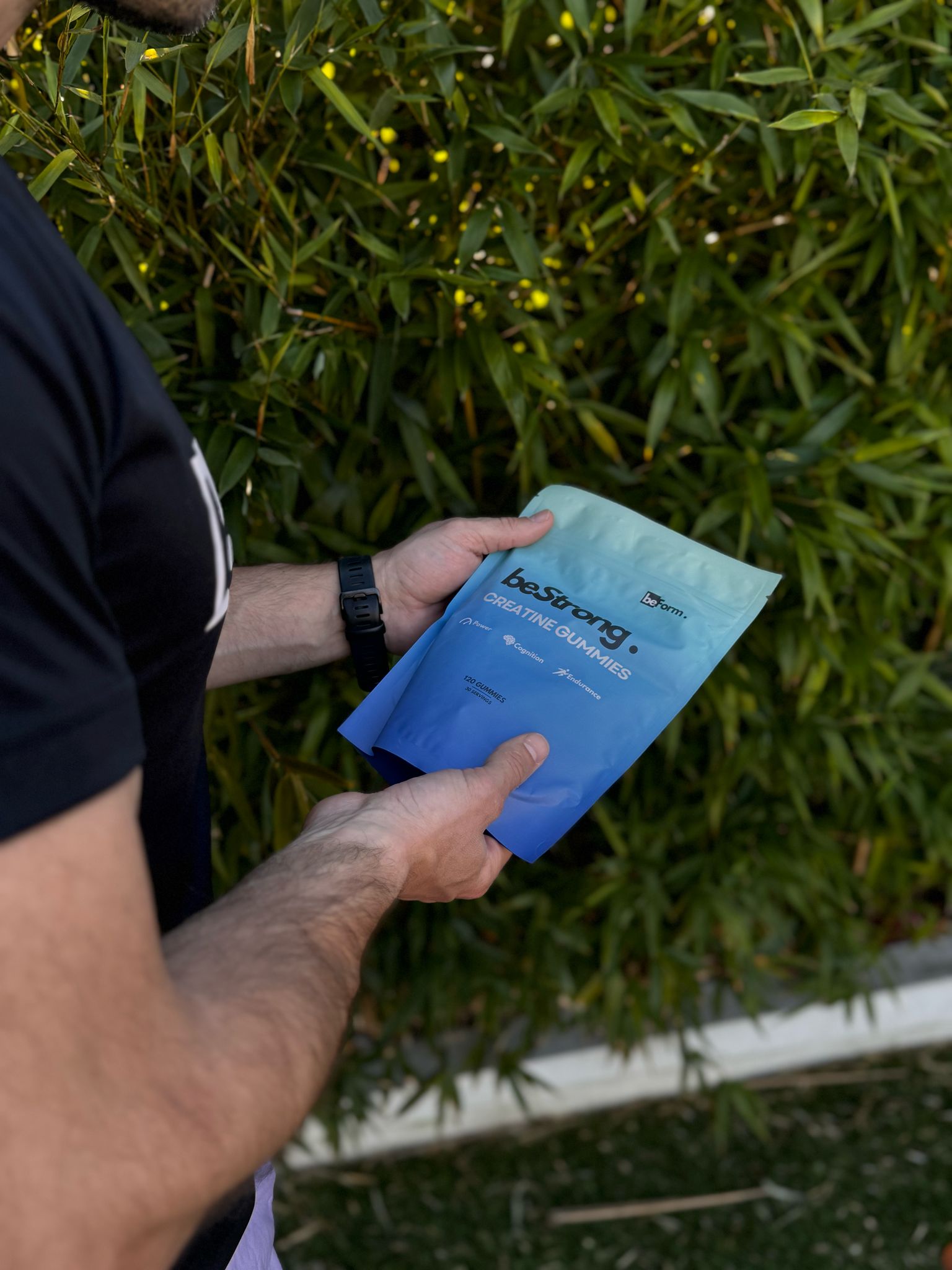
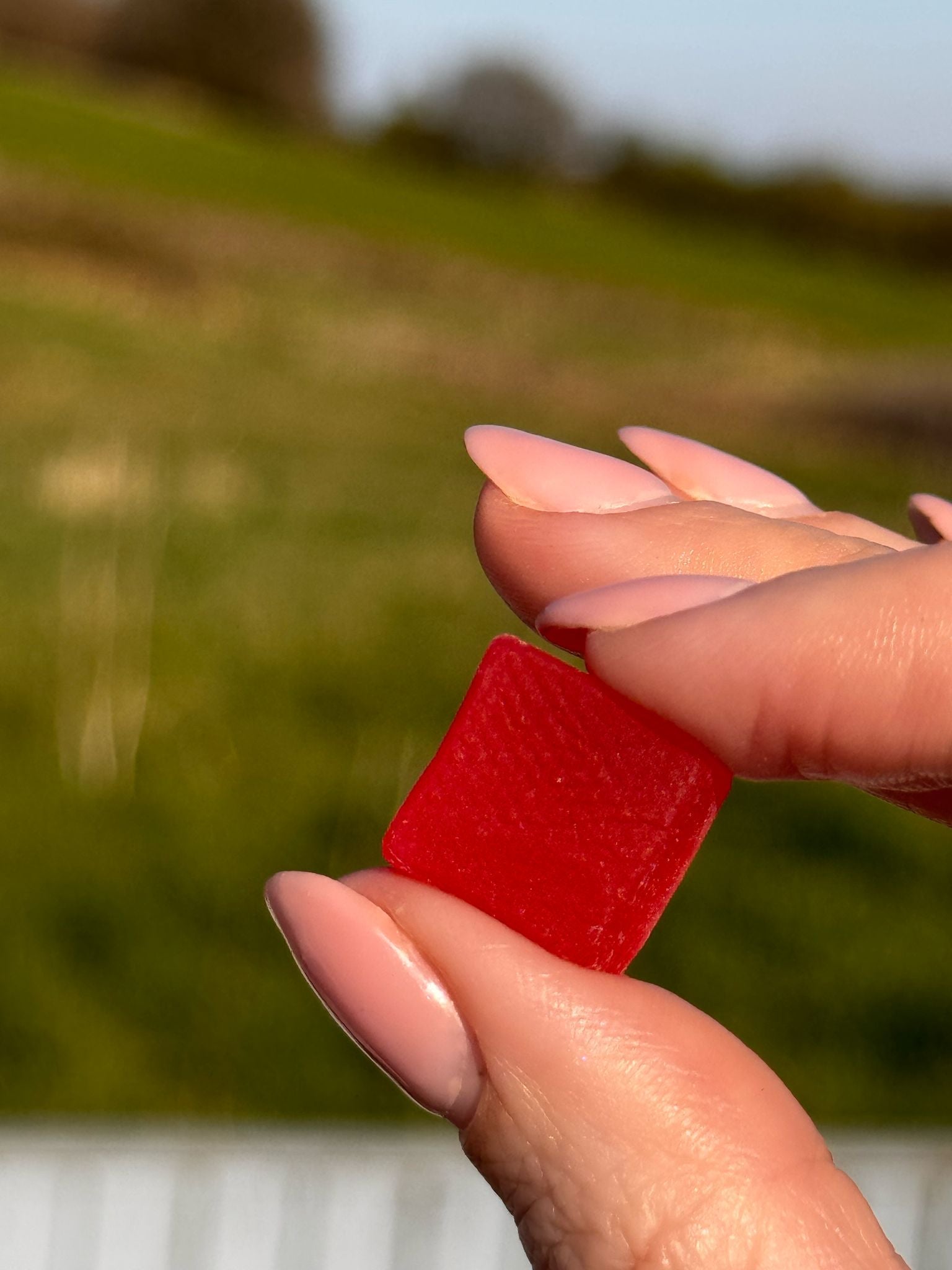
If you're using beStrong gummies, the format actually helps here; the natural sugars in the gummies provide a small carbohydrate hit alongside the creatine dose, which supports absorption without needing a full meal.
It's one of the practical advantages of the gummy format that I didn't fully appreciate until we started getting feedback from customers who'd previously struggled with powder on an empty stomach.
The bottom line: Always take creatine with food if you can. You'll absorb it better, tolerate it better, and you won't be second-guessing whether creatine is the right supplement for you after a bad morning.
Creatine Timing: Does It Actually Matter?
This is one of the most searched questions around creatine, and the honest answer is that timing matters less than consistency, but it's still worth getting right.
Pre-workout: Taking creatine before training means your muscles have it available during the session. Reasonable, but not dramatically superior to other timings.
Post-workout: Some research suggests creatine taken after training, when muscles are primed to absorb nutrients, may be slightly more effective for muscle gain. It's a small edge, but an edge nonetheless.
With food, consistently taking creatine alongside a meal improves absorption and significantly reduces the risk of stomach upset. If you're prone to GI issues, this should be your default.
My recommendation: Take it post-workout with your recovery meal. You get the absorption benefit, the timing benefit, and you're far less likely to experience any digestive discomfort.
How to Avoid Stomach Upset: The Practical Checklist
If you're experiencing cramps, bloating, or digestive issues with creatine, run through this list before you give up on it entirely:
Hydration: Creatine draws water into your muscles, which means your body needs more of it. Drink consistently throughout the day, not just around training. If you're under-hydrated, your digestive system takes the hit first.
Dose size: Never take more than 5g in a single serving. If you're loading, split your daily total across four separate doses.
Take it with food: an empty stomach makes everything worse. Pair your creatine with a meal or, at a minimum, a substantial snack.
Split your dose if needed: If even 5g at once causes discomfort, there's no rule against splitting it. Two 2.5g doses; one in the morning and one post-workout, works just as well and is far kinder to your gut.
Start lower: If you're completely new to creatine, beginning at 3g daily for the first week before moving to 5g gives your body time to adjust.
Powder vs Gummies: An Honest Take
I created beStrong creatine gummies because I was genuinely frustrated with creatine powder. The measuring, the clumping, the chalky texture in whatever liquid you chose to sacrifice, it was a barrier to consistency, and consistency is everything with creatine.
Each serving of beStrong is exactly 4 gummies, delivering a precise 5g dose of creatine monohydrate alongside sodium electrolytes to support hydration. No scoops, no scales, no mess.
And if your stomach is sensitive? Split the serving: 2 gummies before training, 2 after. You get the full daily dose, better distributed, with far less risk of any digestive issues.
If you prefer powder, that's completely fine; the creatine itself is identical. Just measure carefully, take it with food, and drink plenty of water. The format matters far less than the consistency.
How Long Until Creatine Actually Works?

This is the question nobody wants to wait around to find out the answer to.
With a loading phase, most people notice increased training performance within 5–7 days. Muscle fullness often comes first, followed by strength and endurance improvements over the following weeks.
Without loading, you're looking at 3–4 weeks before muscles reach full saturation, and you feel the meaningful difference in performance.
Either way, creatine is not a supplement you take once and feel immediately. It's a long game that pays off consistently when you stick with it. Think of it less like a pre-workout hit and more like a savings account that compounds over time.
Key Takeaways
- Creatine works; the science is unambiguous. Stomach issues are almost always a dosing or hydration problem, not a reason to quit.
- Load at 20g daily in four split doses for 5–7 days, then maintain at 3–5g daily. Or skip loading and start at 5g daily; both work.
- Always take creatine with food and plenty of water.
- Post-workout timing gives you a marginal edge, but consistency beats perfect timing every time.
- If powder is a barrier to your consistency, beStrong gummies exist precisely to solve that problem.
Creatine transformed my training when I finally stopped taking it carelessly. I built beForm Nutrition because I wanted supplements that made doing the right thing easier, not more complicated.
If you have questions about dosing, which format suits you, or anything else, feel free to reach out. I read every message.
Ready to try creatine without the mess or the guesswork? Shop beStrong Creatine Gummies →