

Swill and Spit: Can a Sugar Mouth Rinse Make You Faster Than Your Favourite Playlist?
Can a mouth rinse trick the brain?
A carbohydrate mouth rinse cut perceived effort and sped up a hard 4 km time trial, while a high-tempo playlist did not improve performance, according to a 2026 randomised crossover trial in PLOS One.
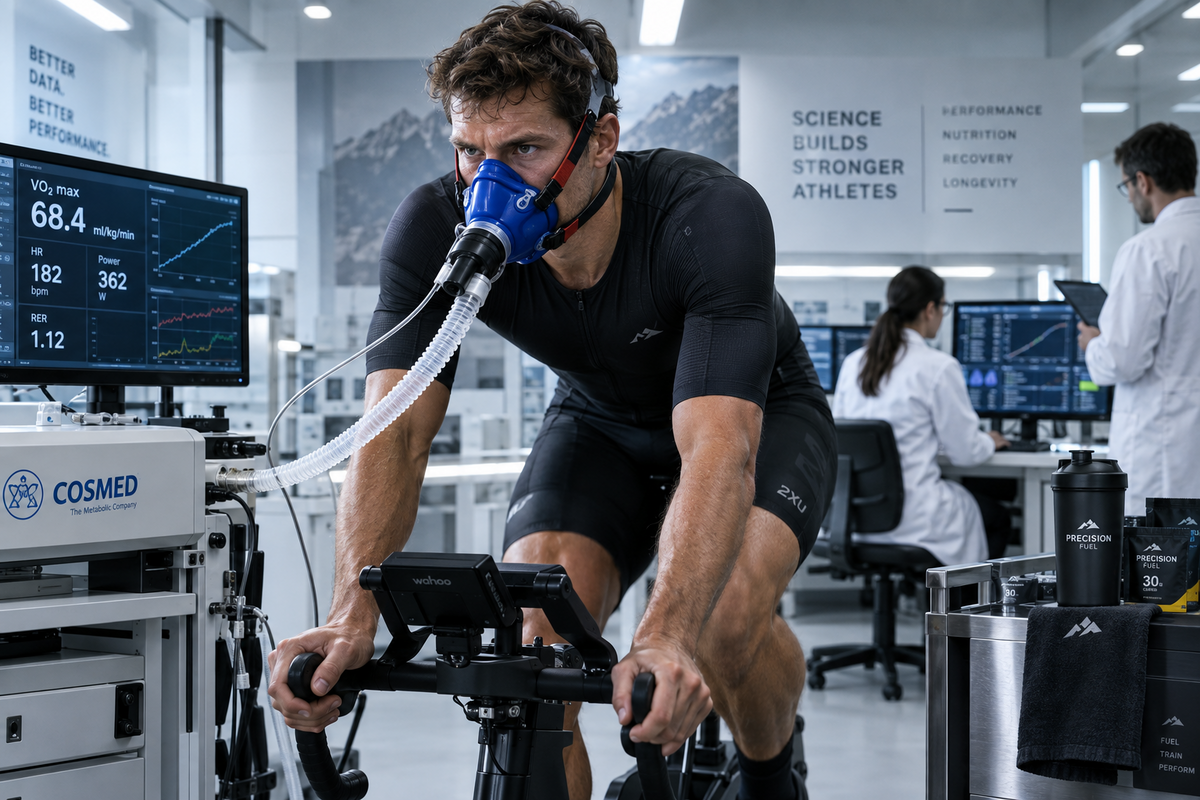
Eleven trained cyclists, seven men and four women, completed a 4 km time trial under three conditions: a maltodextrin mouth rinse (swilled and spat, not swallowed), 15 minutes of 120 bpm music, and a placebo rinse with a trace of artificial sweetener.
The key findings:
- Faster finish. Average completion time was 336.6 seconds with the carb rinse, versus 339.4 seconds with music and 339.4 seconds with the placebo. That is roughly a 0.8% improvement, or under three seconds. The gain was statistically significant against both comparison conditions, but it is modest.
- Lower perceived effort. The carb rinse produced lower ratings of perceived exertion than the placebo at every 500 m interval, and lower than music from 1,000 m to 3,000 m. Music did not differ from the placebo on this measure.
- A sharper brain after the effort. Using near-infrared spectroscopy, the researchers found higher oxygenation in the dorsolateral prefrontal cortex, a region involved in focus and self-control, after the rinse and again after the time trial. Riders in the carb rinse condition also scored better on a Stroop concentration test after the effort.
- Nothing changed in the body. Heart rate and blood lactate were the same across all three conditions, which suggests the benefit came from the brain rather than the muscles.
The details: Each rider rinsed five times with 25 mL of a 6.4% maltodextrin solution, swishing for 10 seconds each time, then spat it out. Mean power output beat the music condition but not the placebo, and mean speed beat the placebo but not music. So the evidence is consistent but not uniform across every metric.
The context: Carb mouth rinsing is not new. Receptors in the mouth detect carbohydrate and signal reward and motivation centres in the brain, with no need for the sugar to be digested. This study adds a direct comparison with music and a look at what is happening in the prefrontal cortex.
The caveats: The sample was small, and the authors say they did not reach their target recruitment. They did not check whether riders could tell which rinse they were given. Music could not be blinded, so those comparisons are exploratory. And this study involved cyclists, not runners. The mechanism, a brain-driven drop in perceived effort, is not specific to cycling, but the results have not yet been confirmed in running.
Mouthwash or mouth rinse?
What if the fastest thing you could do in the final minutes before a hard session didn't involve a gel, a coffee or a banger of a playlist? What if it was a mouthful of sweet water that you never swallow?
Exhausted or not?
Here is what makes the finding interesting. The riders' hearts weren't working any differently, and their blood lactate looked the same. Yet the effort felt easier, and they finished quicker. The likely explanation is that the brain, not the legs, sets the limit in a short, all-out effort. Your sense of how hard you're working is a decision your brain makes, and the sweetness of a carbohydrate rinse seems to nudge that decision in your favour.
Music did turn the effort dial down at points, but it didn't translate into a faster time. In a near-maximal effort lasting around five and a half minutes, feeling better wasn't enough on its own.
Where it counts
Picture the sessions where this could matter: a 5K parkrun effort, a track session, hill repeats, a threshold workout where the last repetition is the one that decides whether the session was a success. A rinse that makes hard efforts feel a little less hard, without a stomach full of sugar and without needing headphones (which many races ban), is an appealing tool.
It is also important to keep it in proportion. This was a short, sharp effort, not a marathon. The study tested a four-minute-plus burst, and carbohydrate rinsing does not supply any fuel. If you're racing a half marathon or marathon, keep taking on carbohydrate as you normally would.
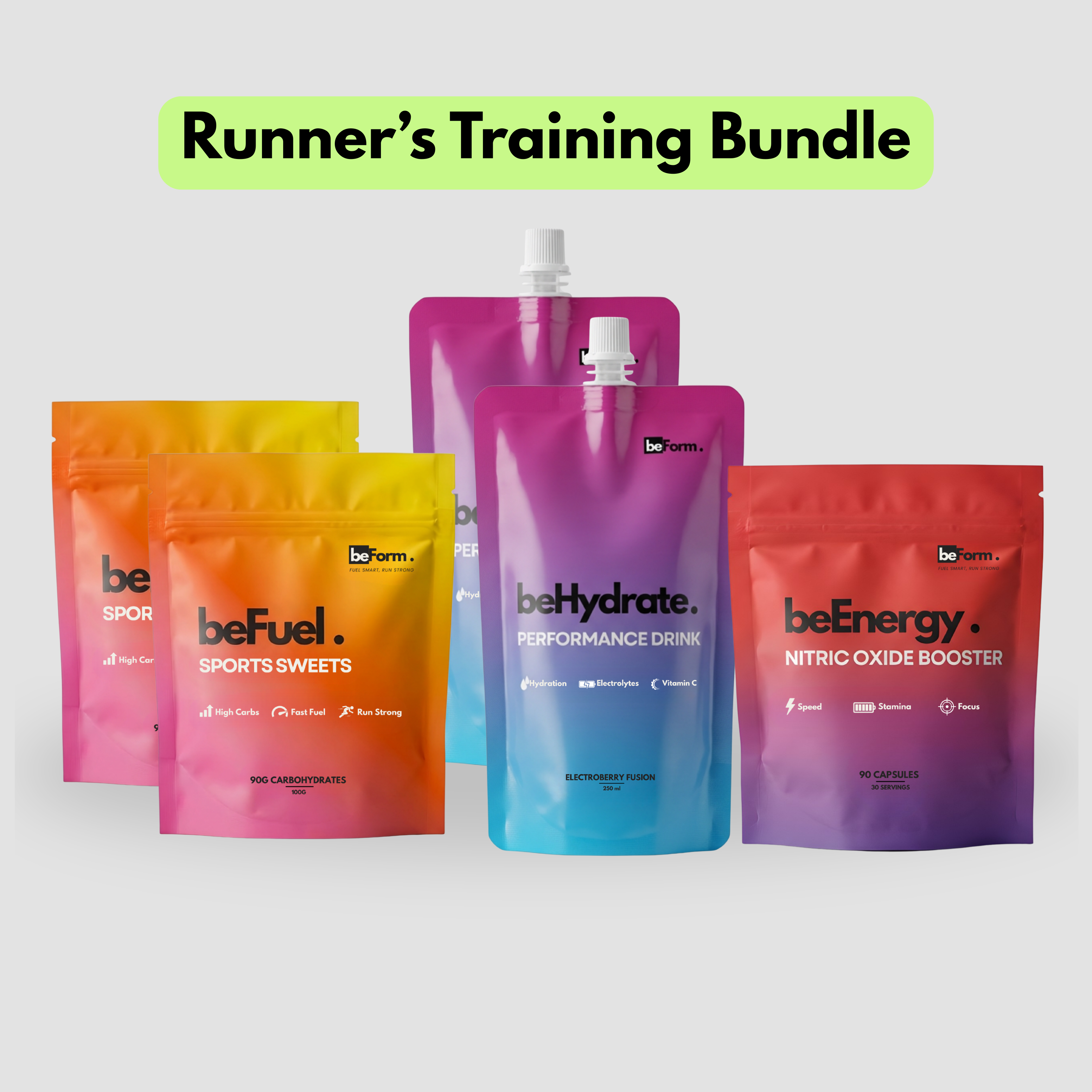
The rinse tells your brain that energy is coming, but it can't replace the energy itself. Think of it as a booster for short, hard sessions, not a substitute for race-day fuelling; for that, look at our specifically formulated beFuel sports sweets.
Try it for yourself
If you want to try it, here is the protocol the researchers used, adapted for you:
- Mix a 6.4% maltodextrin solution: 64 g of maltodextrin powder per litre of water.
- Rinse in portions: 25 mL at a time, swish it around your whole mouth for 10 seconds.
- Spit it out and wait around 30 seconds between rinses. The study used five rinses.
- Test it in a hard training session first, not on race day, and compare how the effort feels against a plain water rinse.
Conclusion
Treat it as a low-cost experiment, not a guaranteed shortcut. The effect was small, the study was small, and your results may differ. But if the last rep of your next hard session feels a touch easier, you'll know it's worth keeping in the kit bag.